Stellar Saunter
A musical skating game across 15 animated constellations, built solo during thatgamejam
Personal Project
2026
Senior Technical Artist / Solo Developer
Context
Skate along roads of starlight, jump to the music, and choose a constellation to visit at each fork. A fox can run alongside the board, dolphins can join a jump, and each new station leaves an animated stamp in the travel album.
My Contribution
I made Stellar Saunter independently during thatgamejam. I directed the art, designed the skating and music interactions, developed the rider and companion animations, built the constellation animation and route editor, and profiled the browser renderer.
Impact / Outcome
I brought 15 illustrated landmarks into a playable browser game. With the route editor and animation previews, I could tune both the motion of a constellation and the time a rider has to see it on approach.
Outcome Summary
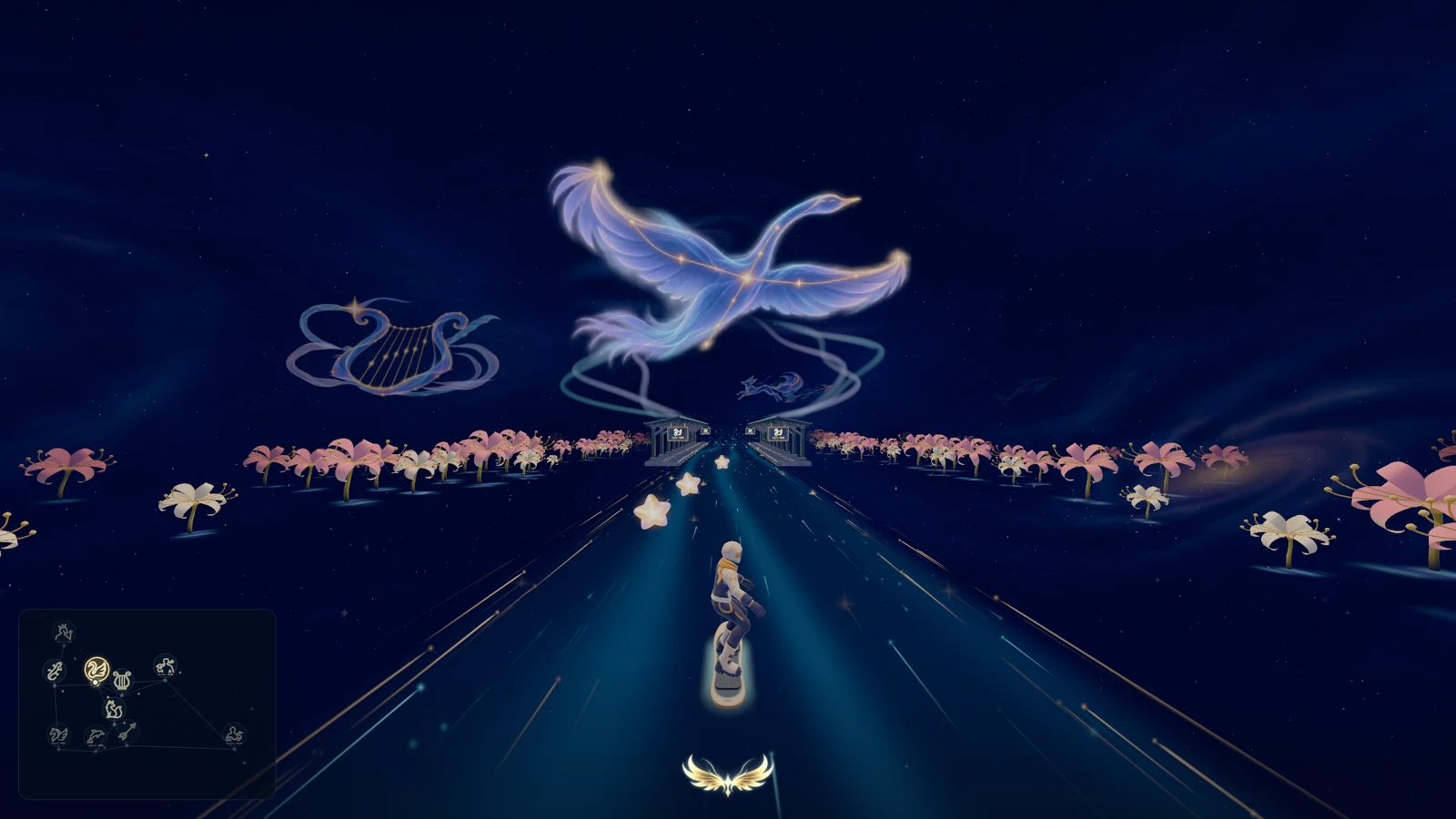
Bringing a constellation to life
Lyra is a harp you can see from the road. In an early pass the whole illustration rippled, so the frame looked as soft as the silk around it. I kept the frame rigid, gave the strings a pluck and decay, and mapped four AI-generated silk textures onto six ribbon meshes. Their roots sit behind the frame. Each loop and free end bends along its length at a slightly different pace.
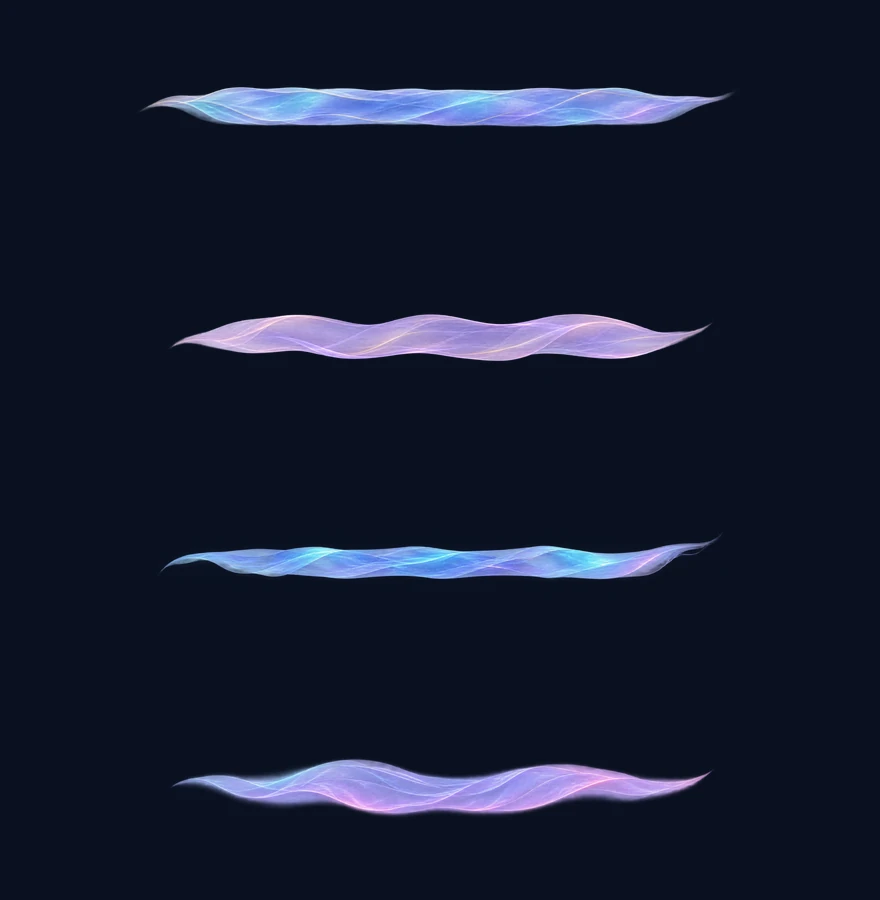 The four ribbon textures, shown flat before they wrap around the harp.
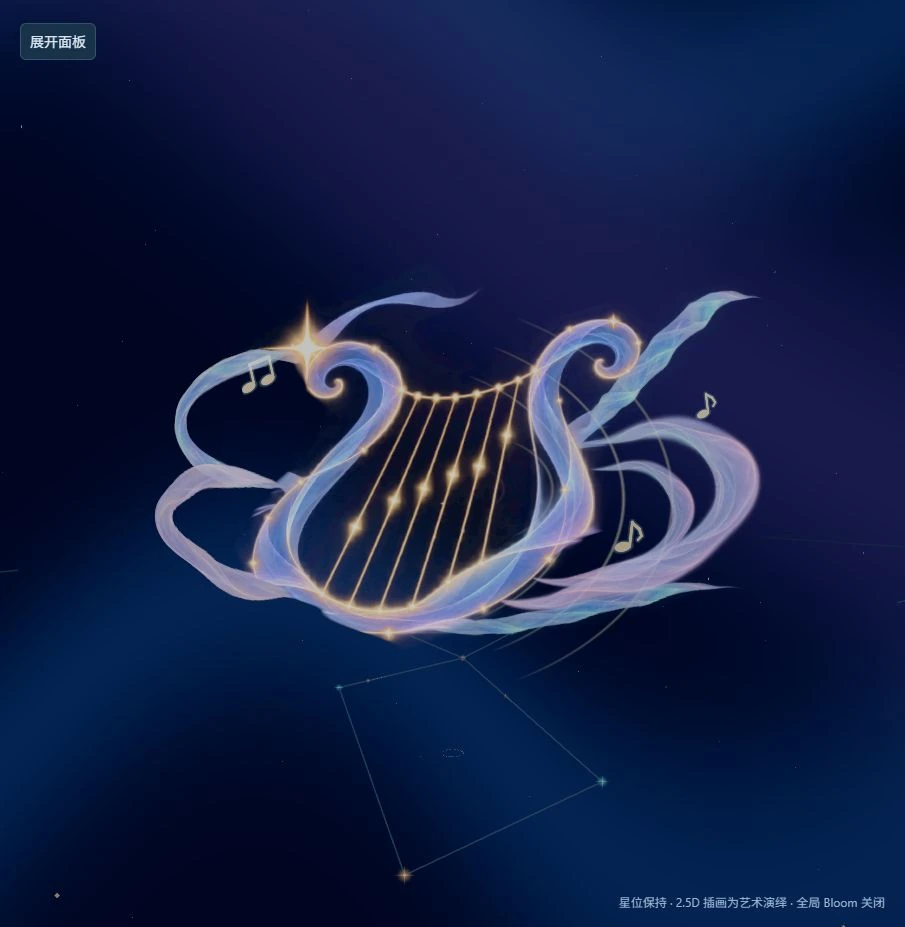 Lyra in the animation review scene. The ribbons pass behind the harp frame and curl around its silhouette.
For each constellation I chose which parts should carry its weight and which could move freely. On Cygnus, the wings open and the tail feathers shift. In the distance, the layered artwork turns toward the rider so its silhouette reads from either direction. As the board approaches, I ease out that rotation and reduce the space between layers to keep gaps from opening at oblique angles.
Animating the rider, fox, and dolphin
The rider’s boots had to stay planted through a turn. The fox had to keep pace beside the board, and the dolphin had to break the surface on a beat. I used AI-assisted Python scripts in Blender to generate the skating poses and ran UniMate locally to generate candidate motions for the two animals.
Rider. I built the glide, carves, tuck, and landing poses on an existing rig with both feet fixed in board space. In a deep crouch, the thigh bones pulled the belt away from the suit. I adjusted the skin weights and added helper bones at the hips to distribute the bend, then compared the exported GLB against the Blender poses. In the game, steering blends the carves and board speed drives the two scarf tails.
Fox. I rigged the fox in Blender and selected one stride from a UniMate run. From the front, the paws landed too close together and one foreleg pulled fur across the opposite shoulder. I widened the stance only during ground contact, cleaned up the shoulder weights, and baked corrective shapes to preserve volume. I reviewed the loop at half speed to check the planted paws and the delayed swing of the tail across the loop seam.
Dolphin. I built a 25-bone rig and reviewed nine UniMate candidates for swimming and leaping. Some barely moved, while larger leaps bent the neck too sharply. I selected a swim and a leap, limited the neck bend, paired the pectoral fins, and carried a delayed vertical wave down to the tail flukes. I reduced the tail beat in the air and shaped the dive back into the water. The leap clip supplies the height and pitch while the game moves the dolphin along the road, keeping the arc and the player’s jump in sync.
Editing both directions of a star road
The 15 stations share 26 two-way roads. I built a Bézier editor so I could adjust a bend once and ride the result from either end. The editor protects the position and tangent where a road meets a junction. I can pull the middle of a curve wider, see how much travel time it adds, and leave the station approach intact.
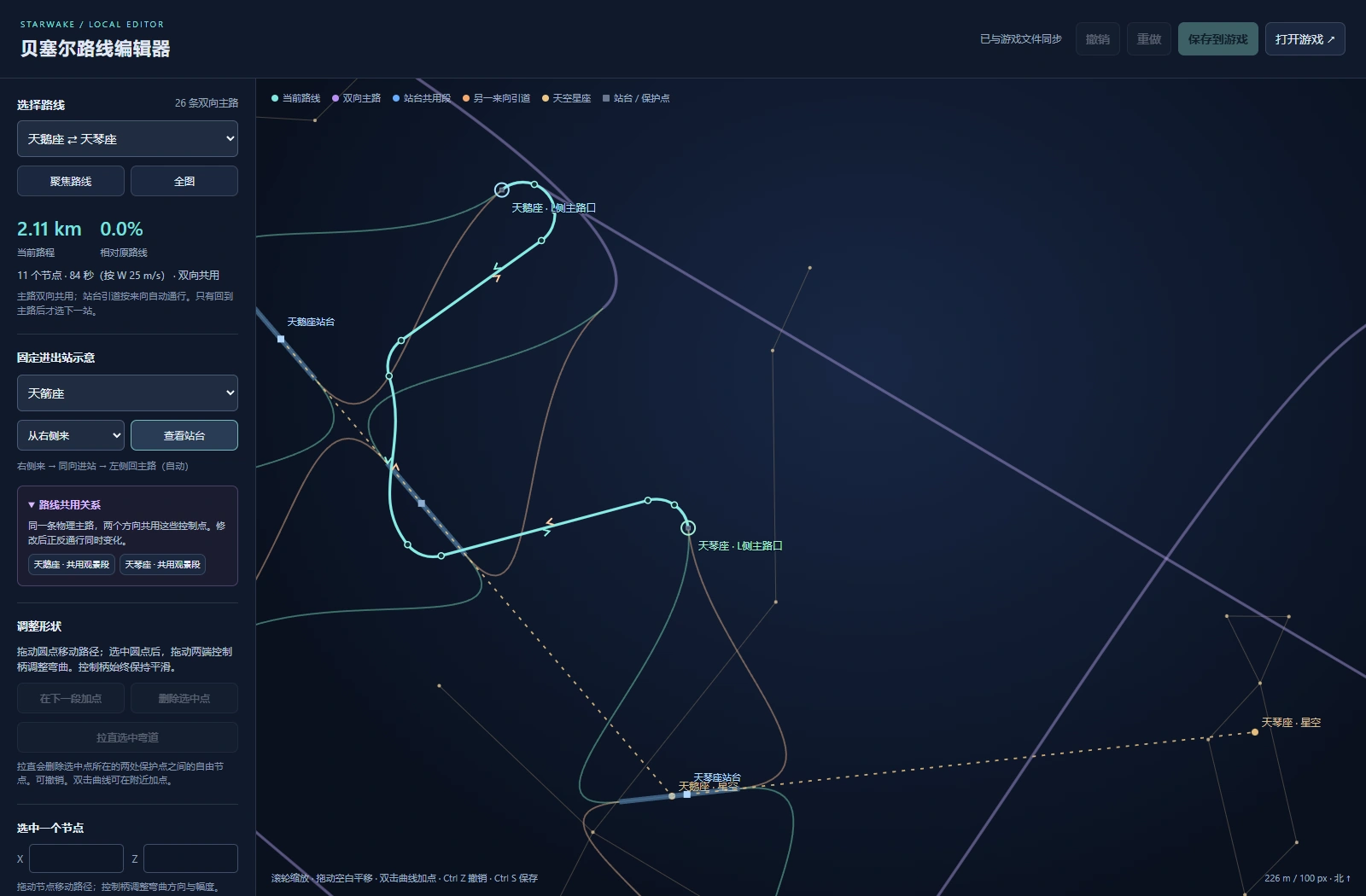 Development route editor with the Cygnus–Lyra curve selected. The handles shape the road, and the side panel shows its length and travel time.
Reversing a route also changes what a rider needs to see. Stars and flowers occupy the same places on both trips, while boost arrows point ahead and feathers trail the board. I checked those relationships across all 52 travel directions. One sharp join made a trail appear to point forward. Smoothing the join fixed it for both approaches.
Showing a beat through the board
A well-timed jump sends a fan of light feathers off the back of the board. An on-beat jump blends gold into blue at the tips. A precisely timed jump turns the full fan gold. I gave the tips more freedom than the roots so they dip as the rider rises and lift as the board descends. At touchdown, the splash appears at the point of contact and stays on the road as the rider moves on.
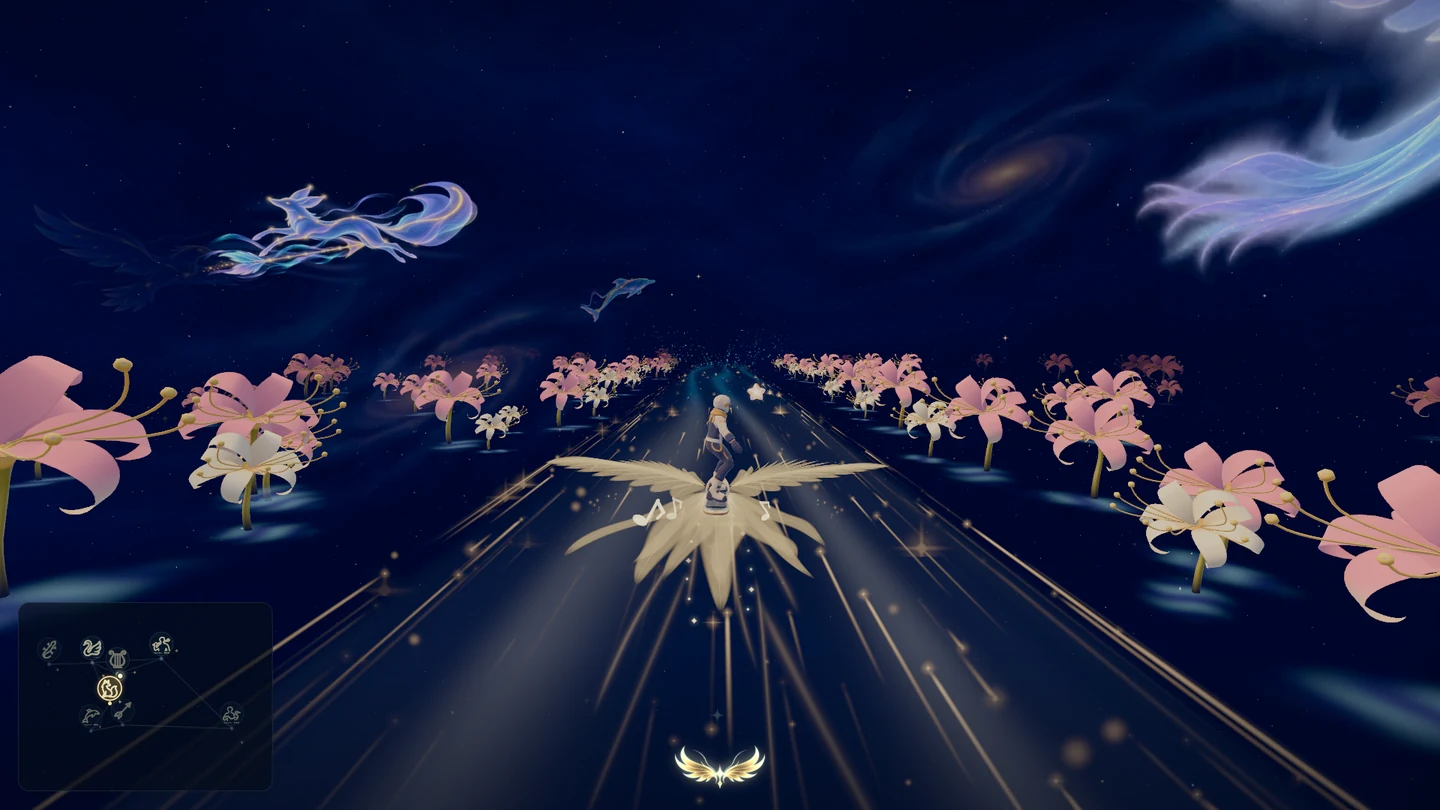 A gameplay capture with boost and rhythm active together. The gold feathers follow the rider above the road.
Finding the cost of fullscreen rendering
At 2560 × 1440 the streaks of light on the road looked choppy. I tested them first. Disabling their updates and drawing barely moved a short WebGPU run from 26.5 to 27.0 FPS. Lowering the internal render resolution on the same stretch brought it to 60 FPS. That gave me a reason to keep the effect and budget the pixels.
I capped the 3D canvas at the pixel count of 1920 × 1080 and kept the interface at the full window resolution. The tradeoff was a softer 3D image on larger displays. In a 60-second Chrome WebGL2 run on an RTX 4070, average frame rate on the Cygnus–Lyra road rose from 27.6 to 59.9 FPS. The 95th-percentile frame interval fell from 50.1 to 16.8 ms. A separate WebGPU run that included the station’s stamp reveal still had slow frames on arrival.
Related Projects
 WIP
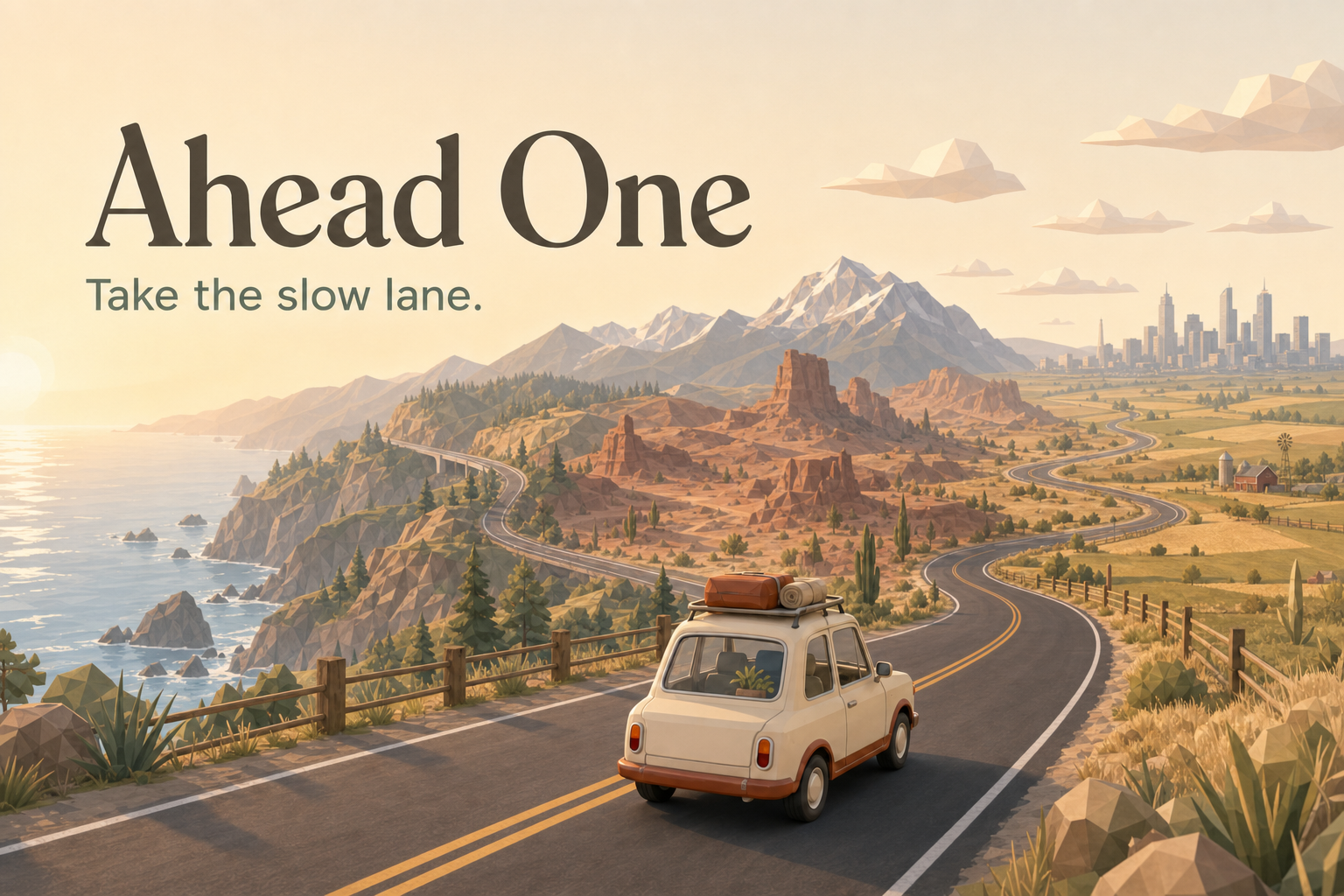
Road Trip: Ahead One
Personal Project · 2026
A browser-based idle and companion game supported by art-directed procedural worlds and an AI-assisted 3D asset pipeline
Impact
Built and publicly released a playable road-trip game while developing a reusable approach to procedural art direction, AI-assisted asset integration, runtime diagnosis, and safe content iteration. Visual refinement and broader performance validation remain in progress.
 WIP
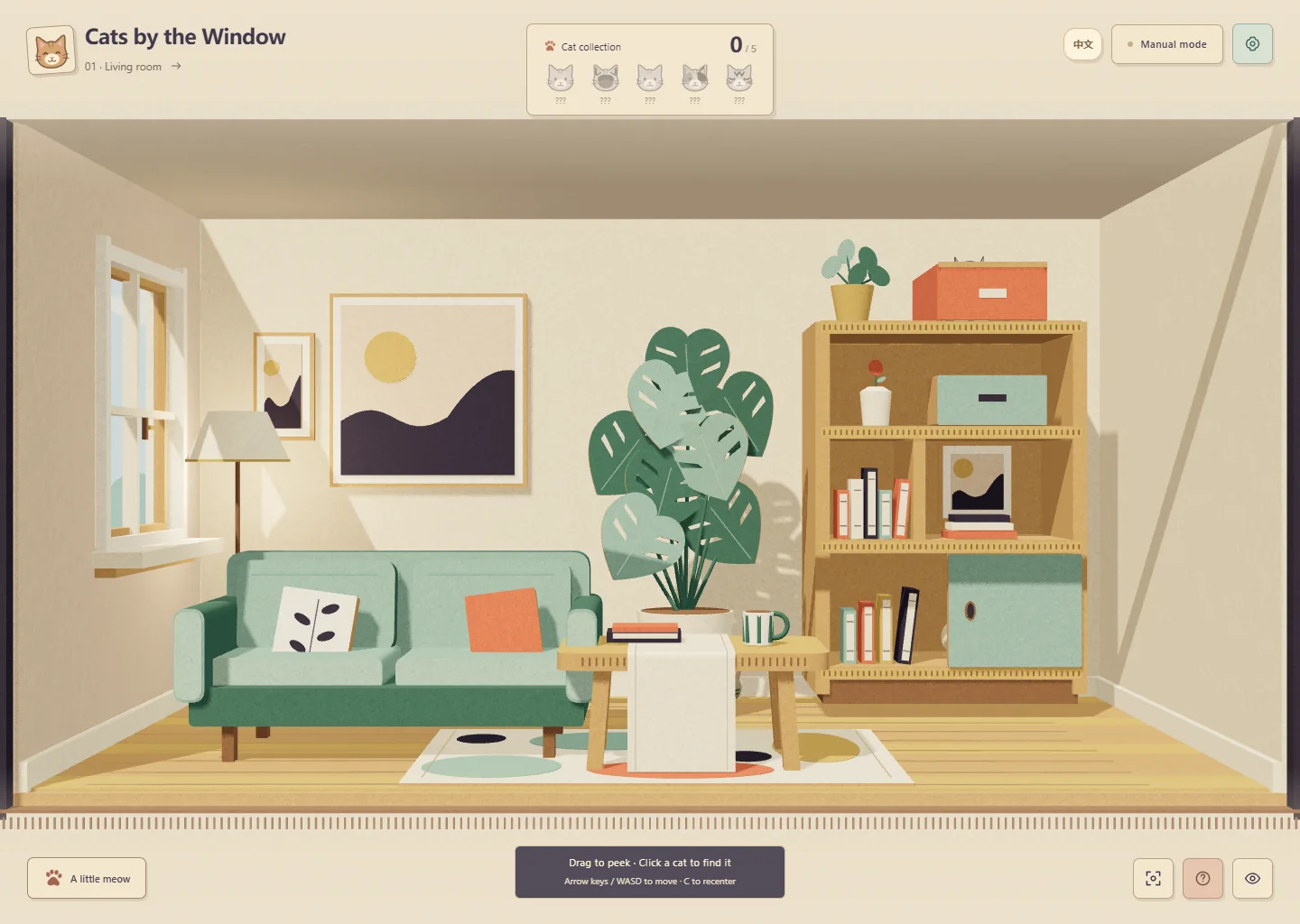
Cats by the Window
Personal Project · 2026
A webcam-driven hide-and-seek game connecting head-tracked perspective, tactile 3D art, and a Blender-to-Three.js content pipeline
Impact
Built a five-level interactive prototype that ties visual perception to playable spatial puzzles, with reusable scene and character workflows and checks against the same assets used in the game.