Swift
HTML5 isometric speed game inspired by Zaxxon and Monument Valley
Student Team Project
2015
Game Artist
Context
A fast-paced 2.5D isometric browser-game prototype that reinterpreted Zaxxon's survival loop with a clean, Monument Valley-inspired visual style, simplified controls, and a focus on speed rather than combat.
My Contribution
Worked as one of two artists, creating the logo, start and game-over screens, space background, and a selection of in-game assets while also contributing to the game concept and level-design discussions.
Impact / Outcome
Delivered a playable browser-game prototype and trailer while building practical experience in rapid team production, isometric art, scope management, and cross-discipline communication.
Outcome Summary
Swift
Swift is a fast-paced 2.5D isometric browser game created as a student team prototype. The project began with Zaxxon, Sega's 1982 isometric shooter, as a gameplay reference. We retained the elevated viewpoint and continuous forward motion, adopted a cleaner visual language inspired by Monument Valley, and removed combat so the experience could focus on speed, navigation, and survival.
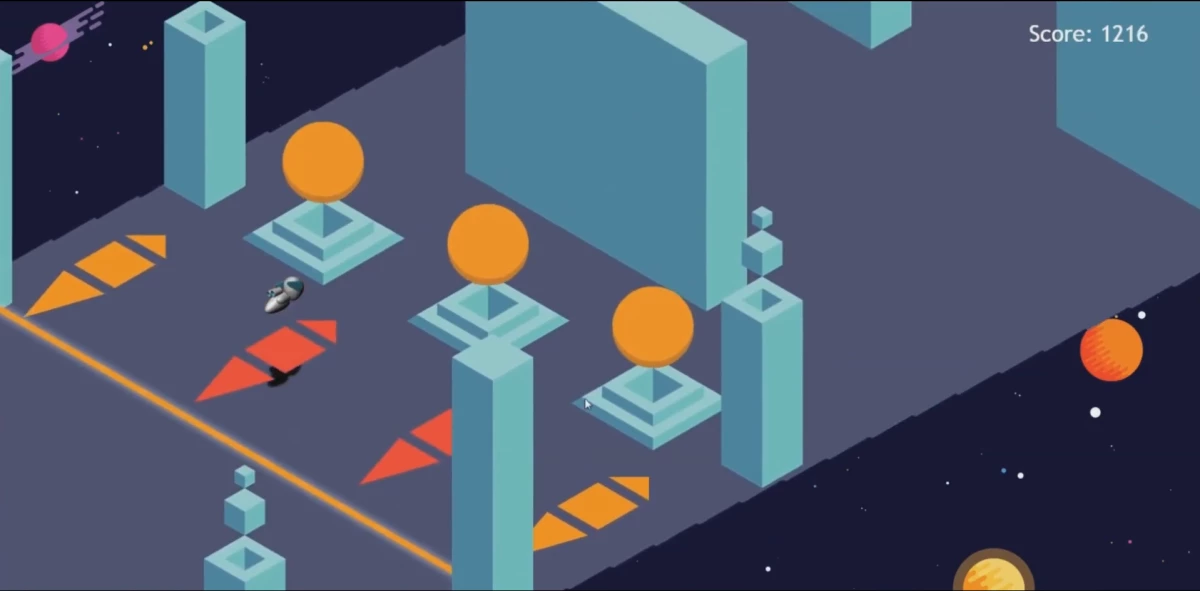 Swift gameplay showing the isometric course and obstacle layout
Table of Contents
Project Overview
The team set an ambitious technical target for a short prototype: build a 2.5D isometric environment in HTML5 and make it readable at speed. The final concept used only the arrow keys, keeping player input simple while the course, obstacles, and power-ups supplied the challenge.
The visual treatment used clean geometric forms, a restrained palette, and strong value separation so the play space remained legible against the surrounding space environment.
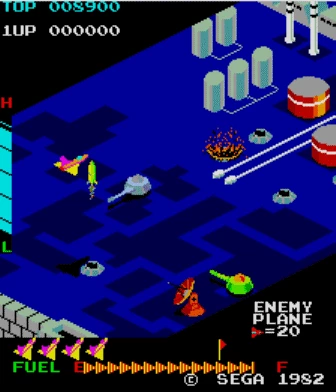 Zaxxon, the isometric arcade reference that informed Swift's starting point
My Contribution
I worked as one of two artists on the project. We divided the art workload, and I was responsible for:
- The Swift logo.
- Start and game-over screens.
- The space background.
- A selection of in-game assets.
- Input on the game concept and level-design discussions.
 Space background and Swift logo artwork
This role required more than producing individual images. The art had to support an isometric course built by the programming team, remain readable during continuous movement, and fit the shared style established across both artists' work.
Design Iteration
The most effective design decision was narrowing the original reference. Rather than reproducing Zaxxon's combat systems, the team identified that forward movement and survival were already strong enough to carry the prototype. We removed combat, emphasized speed, and added power-ups to create variation without overloading the controls.
That decision gave the prototype a clearer identity and reduced some implementation complexity. It also reinforced a production lesson I still value: reference material is most useful when the team extracts the strongest underlying behavior instead of copying every feature.
Production Process
The team held short planning meetings before each work session to review completed work, assign the next tasks, and set deadlines. This lightweight cadence made responsibilities visible and kept the prototype moving despite the unfamiliar HTML5 and isometric-production challenges.
The project also exposed the value of early visual alignment. A stronger concept image showing the intended final experience would have helped programmers understand the target world sooner and would have given the artists a clearer standard for asset consistency.
Postmortem Lessons
The prototype succeeded in pushing the team beyond its previous technical comfort zone, but the postmortem identified several areas for improvement:
- Control scope earlier. The initial design contained more systems and content than the schedule could support. A smaller committed feature set would have left more time for polish.
- Resolve level design before implementation. The first level layout changed during the build because the team had not developed it in enough detail. Treating the level as core content earlier would have reduced rework.
- Create a visual target. A shared concept image or style guide would have improved alignment between art and programming and made the intended result easier to evaluate.
- Maintain asset consistency. Animation quality and inconsistent shadow treatment made some assets feel disconnected. A short art checklist and review pass would have caught these issues.
- Communicate across disciplines more often. Earlier and more frequent discussion with producers and programmers would have helped balance the art target against implementation time.
Outcome
Swift became a complete playable prototype with a distinct visual identity and a concise gameplay loop. More importantly, the project produced a useful early lesson in rapid production: ambitious technology can motivate a team, but clear scope, early visual communication, deliberate level design, and consistent asset standards are what turn a promising prototype into a polished game.
The original 2015 postmortem documents the project in its original context.