Vehicle Visualization: Xiaomi YU7
Art direction, native Unreal systems, and verified cinematic delivery in 3 days
Personal Project
2026
Senior Technical Artist / Solo Project Lead
Context
A personal automotive visualization project completed with 3 days of total development effort using an AI-assisted workflow. I directed the scope, visual design, technical architecture, and review process, taking an existing vehicle model through asset preparation, look development, procedural effects, and an 18-second Unreal Engine cinematic.
My Contribution
Owned project planning, art direction, technical decisions, and iteration priorities. Used AI assistance for scripting, implementation, troubleshooting, and validation while directing the asset pipeline, material system, lighting, camera choreography, and final delivery.
Impact / Outcome
Delivered an 18-second cinematic at native 4K / 24 fps, 1080p previews, nine selected 4K frames, and editable Unreal assets within 3 days of total effort. The project demonstrates how I connect visual direction, technical constraints, and evidence-based review in an AI-assisted production workflow.
Outcome Summary
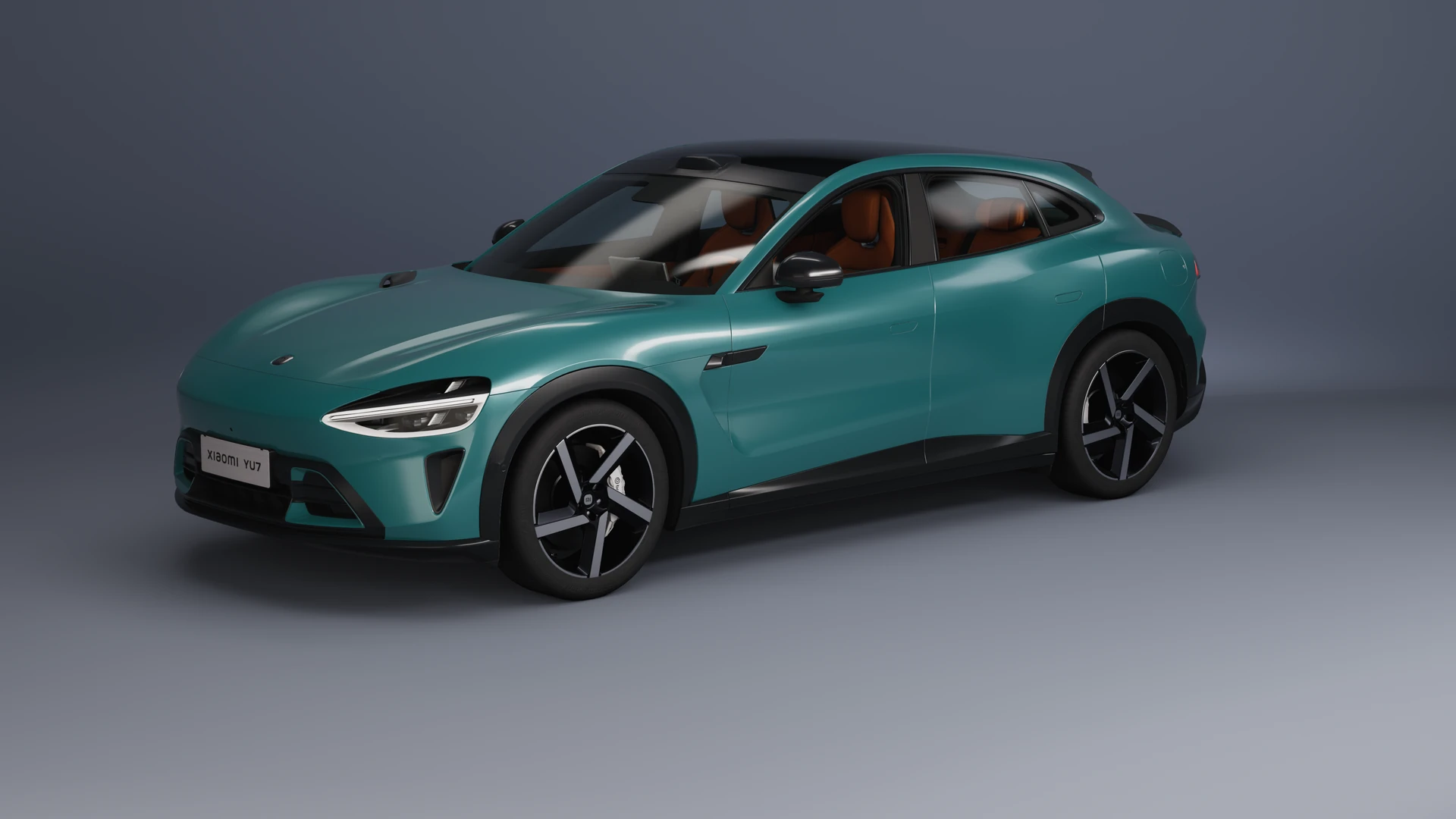
Material in Motion
Personal project · AI-assisted · Total development effort: 3 days.
I directed an automotive visualization study from an existing Xiaomi YU7 model to a finished Unreal Engine cinematic. The challenge was to make materials, lighting, motion, and technical effects read as one designed sequence while keeping the scene editable and the work verifiable.
My ownership covered planning, art direction, technical decisions, and quality review. AI assisted with scripting, implementation, troubleshooting, and validation. I set the brief, chose the visual references and priorities, and guided revisions against the intended result. The original vehicle model is by Ddiaz Design; my work builds on that asset.
The final sequence introduces five finishes, returns to mineral teal, and transitions through airflow and a full-body surface grid. The source project also includes native 4K delivery and a separate five-second studio camera move.
Planning the Work Around a Clear Visual Goal
I organized the work into inspectable stages: asset preparation, studio look development, surface-grid studies, tunnel choreography, and finish variation. Each stage established something the next could reuse: reliable geometry and materials, a readable lighting setup, then effects and timing.
With three days of total effort, scope decisions mattered. I used an existing vehicle model and concentrated on the technical art around it. Runtime behavior stayed in Blueprint, Sequencer, and native material graphs; Python handled editor preparation and offline checks. This kept the scene's behavior accessible in Unreal and made automation useful without becoming a playback dependency.
Major revisions used separate maps, sequences, and changed assets. Preserving earlier results gave me a dependable comparison when adjusting lighting, effects, or timing, and kept a failed experiment from replacing the last usable version.
Designing the Shot's Visual Hierarchy
The vehicle needed to remain the focal point as the effects accumulated. I directed long reflections along the body to describe its form, restrained the tunnel's competing highlights, and separated the airflow into two primary lines and five supporting lines. Different brightness and phase offsets gave the lines a hierarchy.
The sequence has a deliberate progression: read the finish, follow light along the body, reveal the surface grid, then return to a clean vehicle. The grid follows the leading light with an eight-frame delay in the main reveal, retaining a low afterglow so the rear door remains legible. The final second clears the effects to let the material and silhouette carry the ending.
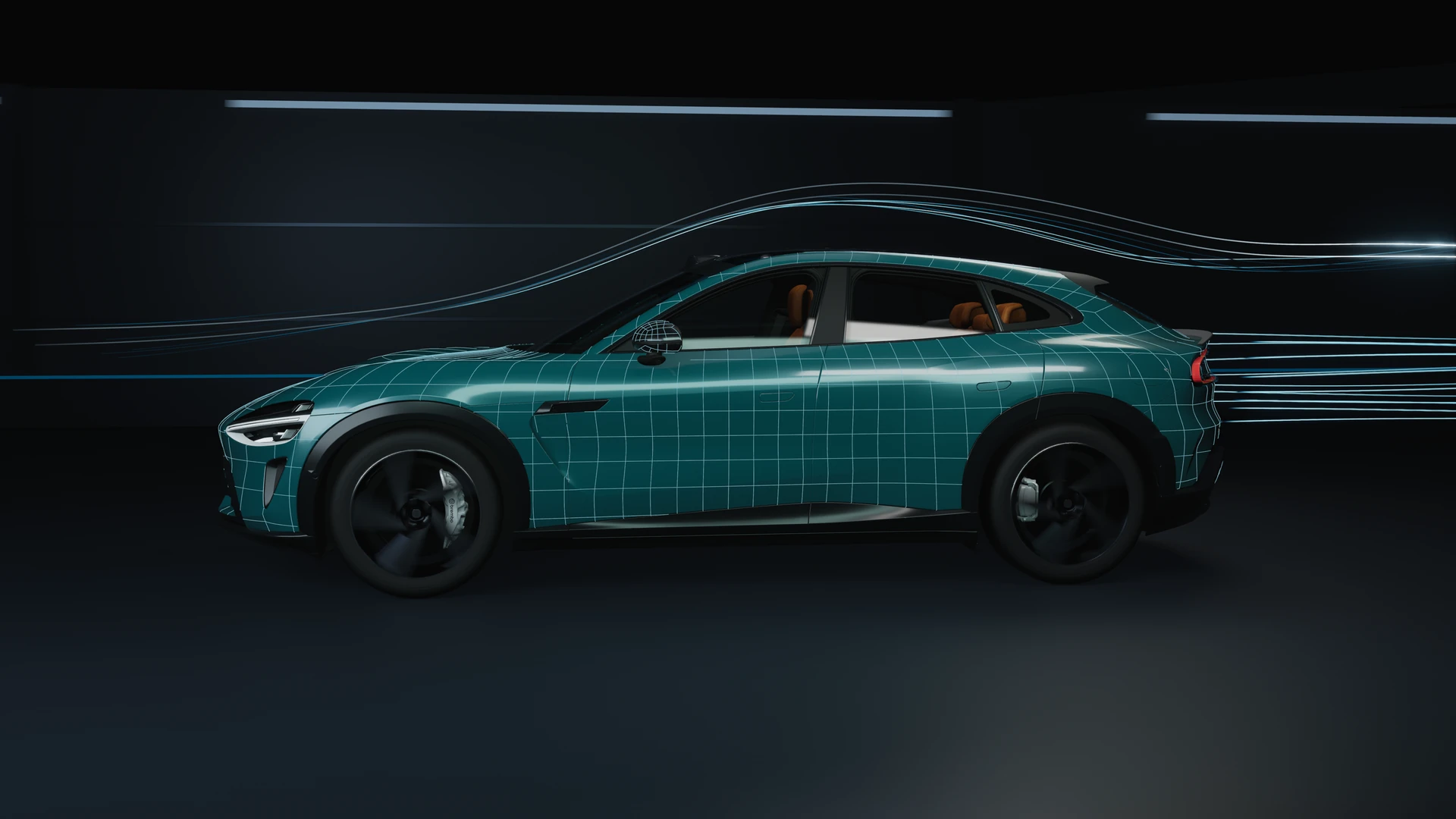 The full-body grid reveal, with the rear door retained and roof airflow kept above the silhouette
Building a Coherent Material System
The opening presents grey-blue gloss, blue metallic, white pearl, graphite matte, and grey ceramic gloss before returning to the established mineral teal. A native Material Parameter Collection coordinates pigment, edge color, roughness, metallic response, clear coat, and color variation across nine visible paint slots. Glass, lights, tires, and trim retain their own materials.
Six-frame eased parameter transitions keep the change continuous across the body. To give each finish time to read, I extended the original 12-second shot to 18 seconds: the opening motion slows, accelerates smoothly, and reconnects with the existing effects sequence. Camera, vehicle, wheels, following lights, and effect time share that retiming function, so the presentation stays synchronized.
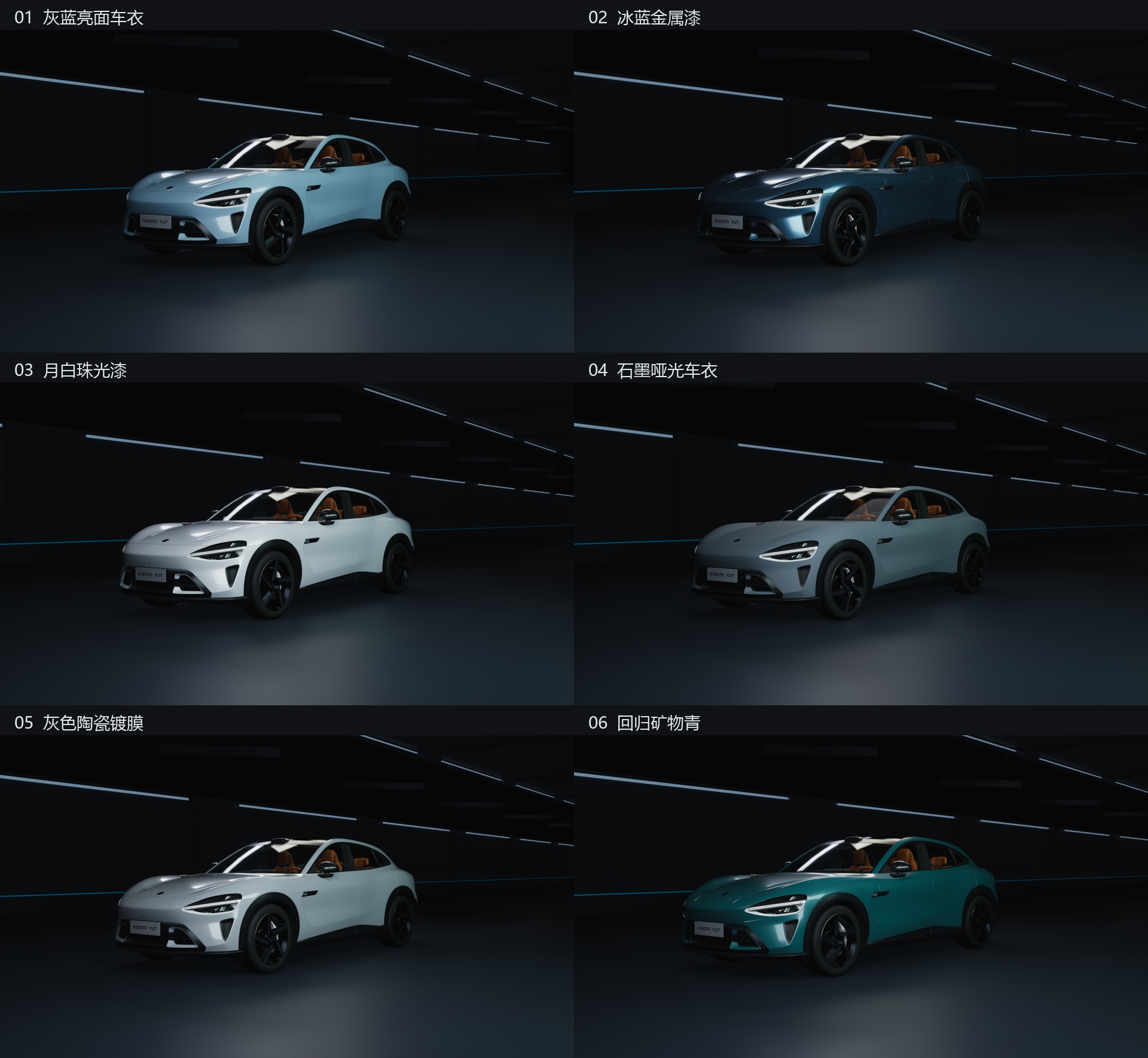 Five opening finishes and the return to mineral teal, captured from the final sequence
These are art-directed finish studies. The pearl and ceramic appearances are visual interpretations; their parameters are not calibrated manufacturer paint measurements.
Solving the Technical Problems Behind the Image
Asset integrity. The Blender-to-Unreal preparation preserved 121 separate vehicle parts and their material relationships. Work included consistent scale and orientation, missing and degenerate UV repairs, normal and tangent checks, and FBX roundtrip comparison. Unreal used full-precision UVs to avoid collapsing very small repaired UV triangles. The original model and textures remained intact.
Controllable effects. Airflow brightness and traveling waves use native material nodes and World Position Offset. A shared shot-time parameter synchronizes them with the vehicle and grid. The world-space wake remains independent of the vehicle transform. The surface grid is separately authored display geometry, which allows the reveal to be controlled without altering the original car's topology.
Visual judgment backed by measurement. An earlier airflow pass followed small roof details too closely and produced a visible corner. I directed a smoother overall profile; the revision used broad height smoothing and a small lift, then checked the animated geometry against the car. The recorded 96 Hz sampling found a minimum clearance of approximately 13.68 cm. Render comparisons confirmed the smoother silhouette.
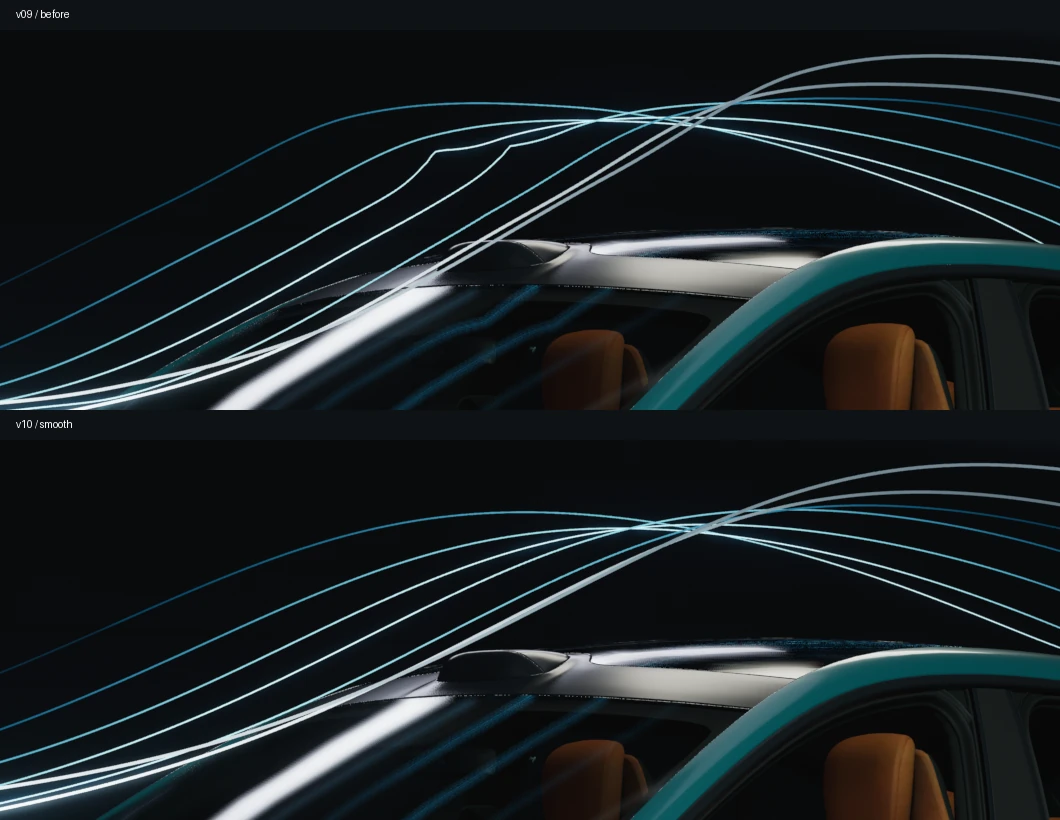 Roof airflow before and after smoothing: the local kink becomes a continuous curve
Engine reliability. Variant Manager exposed unstable bindings to Blueprint construction-script components. The workflow moved those bindings to stable native actors and used a documented cache-clear step before map reload. Recording the failure and the recovery path made later scene work more predictable.
The airflow is an illustrative effect, and the grid communicates surface flow. Neither is a CFD result or a reconstruction of the source mesh's quad topology.
Delivery and Review
The project produced an 18-second, native 3840 × 2160 cinematic at 24 fps, with labeled and clean versions, 1080p previews, nine selected 4K frames, and editable Unreal assets.
The delivery records cover complete PNG and MP4 decoding, contact-sheet inspection across all 432 frames, material values at each finish plateau, and a final save/reload audit. The final Map Check reported zero errors and zero warnings; 708 protected historical files retained their recorded hashes. These checks gave each revision a traceable relationship to its source assets and output.
This is a completed cinematic study. Packaged application testing, validation on a new machine, and an in-app Credits interface remain outside the completed delivery. The 24 fps figure describes the rendered sequence, rather than a measured interactive frame rate.
For me, the value of the three-day AI-assisted workflow was the ability to move quickly between direction and implementation: define a visual problem, choose a bounded technical approach, inspect the result, and carry the accepted decision into the next stage.
Asset Credit
"2025 Xiaomi YU7" (https://skfb.ly/pCSLu) by Ddiaz Design is licensed under CC Attribution-NonCommercial-ShareAlike (http://creativecommons.org/licenses/by-nc-sa/4.0/).
The vehicle asset was adapted for scale, UV and material preparation, look development, and visualization. Web images are resized or compressed copies of the project renders; the before/after image is an inspection comparison. The original attribution is also preserved in the media credits and video metadata.
Related Projects
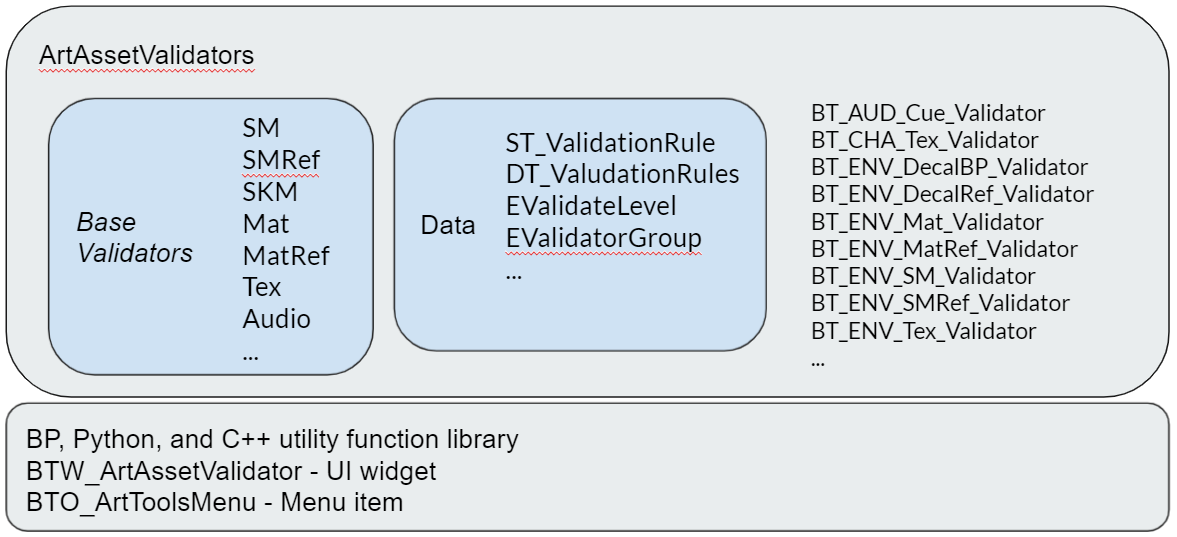
UE Art Pipeline Tools
Manticore Games · 2020
Asset import, validation, and automation tooling on the Unreal side
Impact
Gave 20+ artists a UE-side tool layer they use daily, with import and setup collapsed into one click. 98 data-driven validation rules catch asset problems before they reach a build, bringing daily build errors from asset issues down to near zero.
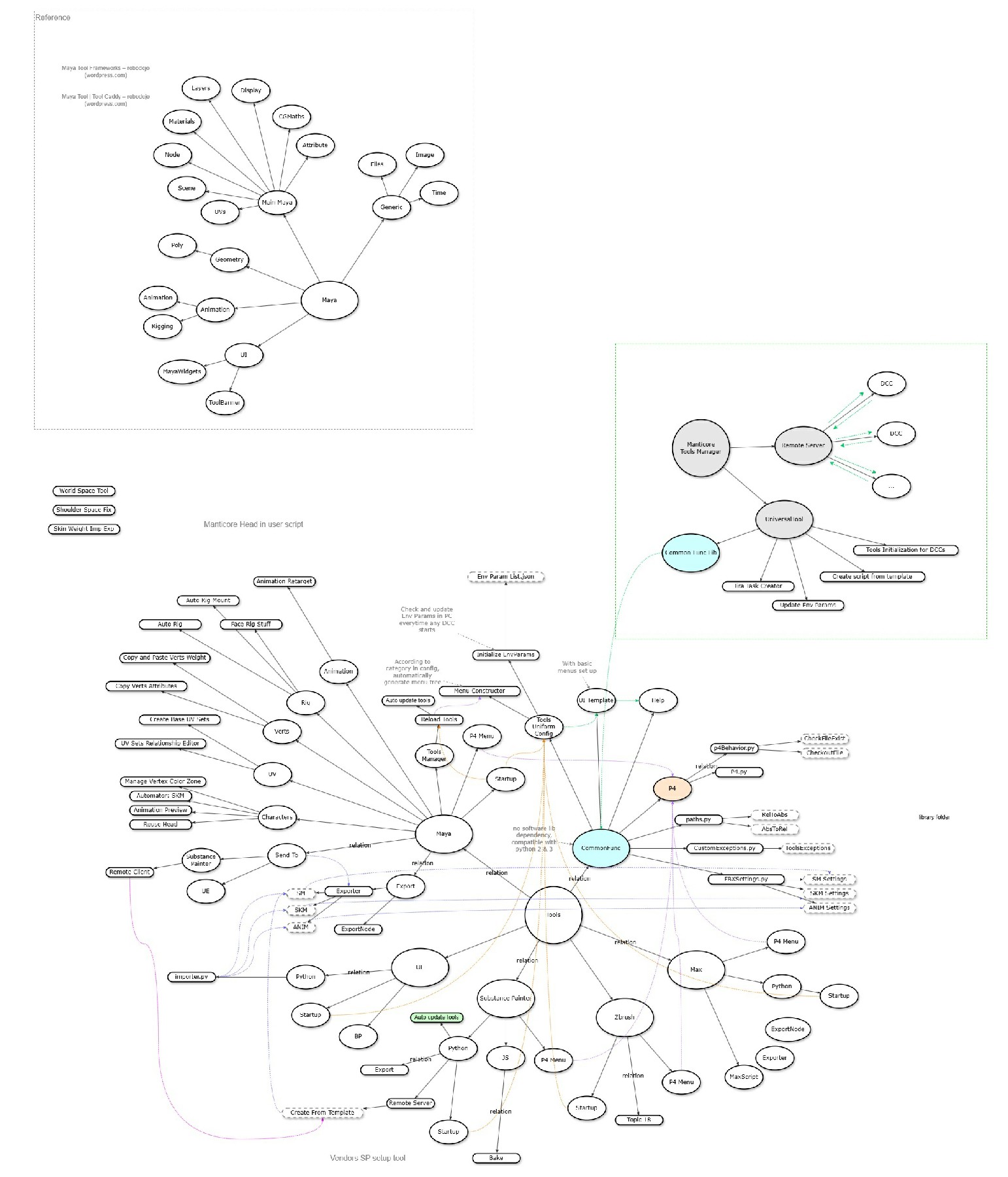
DCC Tools / Pipeline
Manticore Games · 2020
Digital content creation tools and pipeline integrations
Impact
Standardized artist-facing DCC workflows, reduced manual export/setup work, and made pipeline tools easier for technical artists to maintain and extend.
 WIP
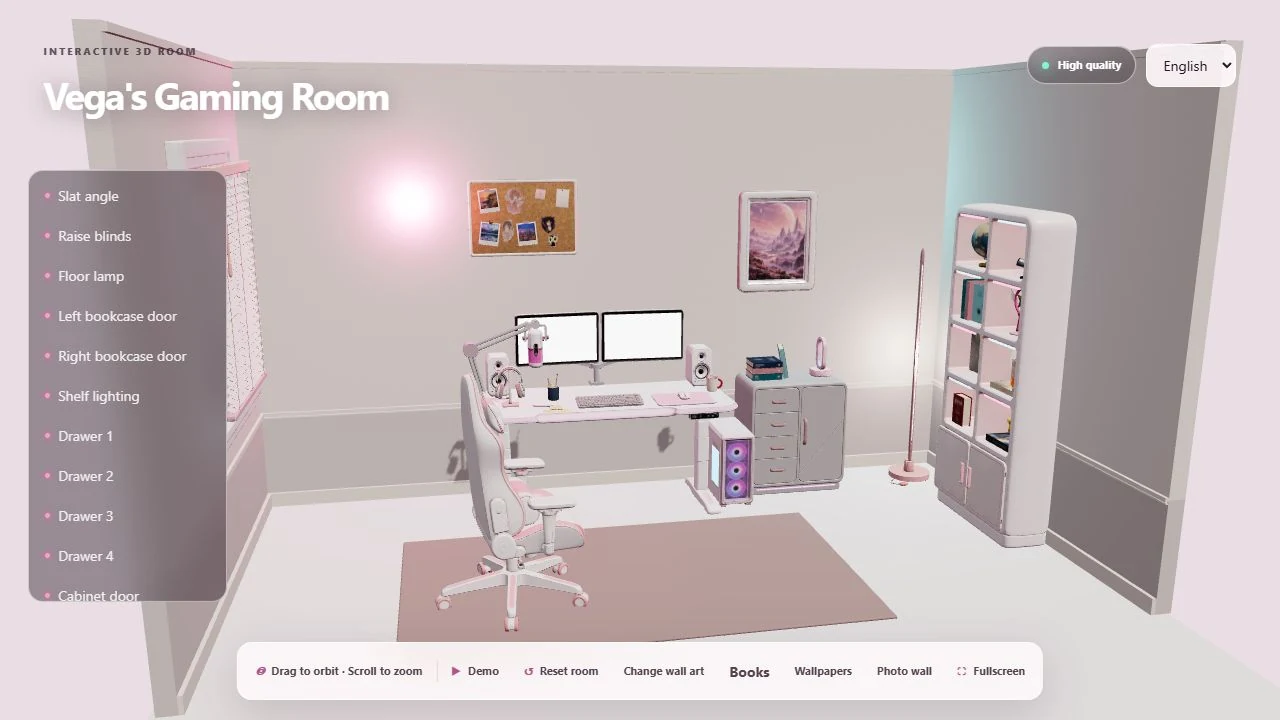
My Gaming Room
Personal Project · 2026
From AI-generated models to interactive, simulation-ready 3D assets
Impact
Built a repeatable path from generated models to interactive and simulation assets, with every step checked against geometry quality, mechanical function, and measured contact. When an asset is replaced or the environment is extended, the impact can be judged directly against existing interfaces and validation results.